Designrr vs Canva: The Short Answer
Goal: find out which tool is better for turning content you already have, like blog posts, into an eBook.
Quick answer: I tested the Canva side with a real blog post. Canva couldn’t turn the post’s URL into an eBook: it gave me a one-page screenshot. From pasted text, though, Canva’s AI made a clean 6-page eBook in about 40 seconds, with one typo to fix. So choose Designrr if you want to import blog posts and export Kindle or ePub files, and Canva if you’ll paste the text and care most about design.
Below: my test results, then step-by-step guides for both tools and how to use them together.
On this page
- Designrr vs Canva: The Short Answer
- Designrr vs Canva at a Glance
- My test: one blog post, turned into an eBook
- Results at a glance
- How to Make an eBook in Canva
- How to Make an eBook in Designrr
- Using Designrr and Canva Together
- eBook Design Examples
- Which One Should You Choose?
- Choose by What You’re Making
- If You Plan to Publish on Kindle
- Check Your AI Draft Before You Publish
Designrr vs Canva at a Glance
| Canva | Designrr | |
|---|---|---|
| Main purpose | General design tool | eBook and lead magnet creation |
| Best starting point | A template, or text you paste in. In my test it couldn’t turn a blog URL into an eBook | Existing content such as a blog post, DOCX or video |
| AI writing | Magic Write in Canva Docs | Wordgenie builds a draft from a topic |
| Design control | Very high | Good, but based more on layouts |
| Main eBook export | PDF only (no ePub or Kindle file) | PDF, plus Kindle and ePub on Pro and above |
| Cost | Has a free plan, with paid plans for more features | From $29 a month (Standard); Kindle and ePub export from $39 a month (Pro), on its pricing page on 14 November 2026 |
| Other uses | Social posts, presentations and promotions | Mostly long-form content |
Both companies change their plans, so check their pricing pages before you pay.
My test: one blog post, turned into an eBook
The main reason people compare these two tools is one job: turning blog posts into an eBook or lead magnet. So on 14 November 2026 I tried that job in Canva, with a real PortrayMedia post: my test of 12 handwriting fonts. I tried it two ways:
- From the URL: I gave Canva the post’s web address and asked it to import it as an A4 design, the way Designrr imports a blog post.
- From pasted text: I gave Canva’s AI design tool a 230-word summary of the post and asked for a short A4 eBook.
Then I exported the result as a PDF, read it on a phone-sized screen, checked every page for mistakes, and looked at what Canva can export.
What I couldn’t test: Designrr has no free plan, and I don’t have an account, so I haven’t run the same job in Designrr. Its side of the table below comes from its own pricing page, checked on 14 November 2026, and is marked “not tested”.
Results at a glance
| Job | Canva (tested) | Designrr (from its pricing page) |
|---|---|---|
| Turn a blog post URL into an eBook | Fails: one page, a screenshot of the top of the post, no editable text (about 6 seconds) | Its main feature, listed on every plan (not tested) |
| Turn pasted text into a designed eBook | Works: 6 A4 pages in about 40 seconds, with a clean layout | Wordgenie and templates (not tested) |
| Accuracy of the AI draft | One typo it added itself, and page numbers in three styles | Not tested |
| Export | PDF only: 8.3 MB for 6 pages | PDF; Kindle and ePub from the Pro plan, $39 a month |
| Reading the PDF on a phone | Readable without zooming: the text shows at about 13 px | Not tested |
| Kindle or ePub file | No: Canva’s help centre says it can’t export ePub, KPF or MOBI | Yes, from the Pro plan |
My verdict: if you want to turn existing blog posts into an eBook without retyping, Canva can’t do it: its URL import only gave me a screenshot of the page. That job is what Designrr is built for. But if you’re happy to paste or write the text, Canva’s AI made a good-looking 6-page eBook in under a minute. Just proofread every page, and know that it only exports PDF.
1. Canva can’t turn a blog URL into an eBook
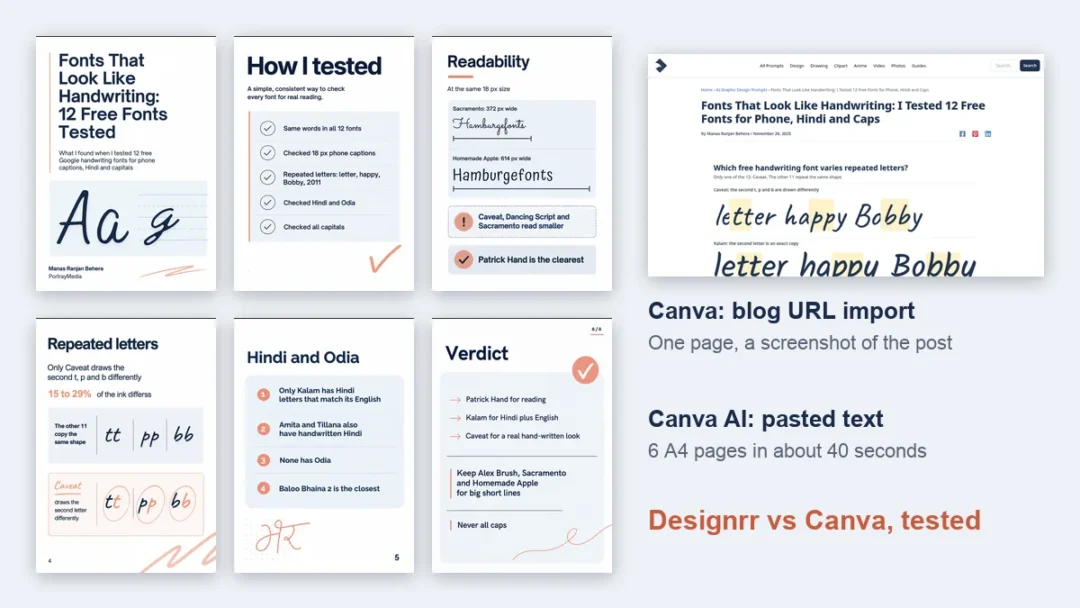
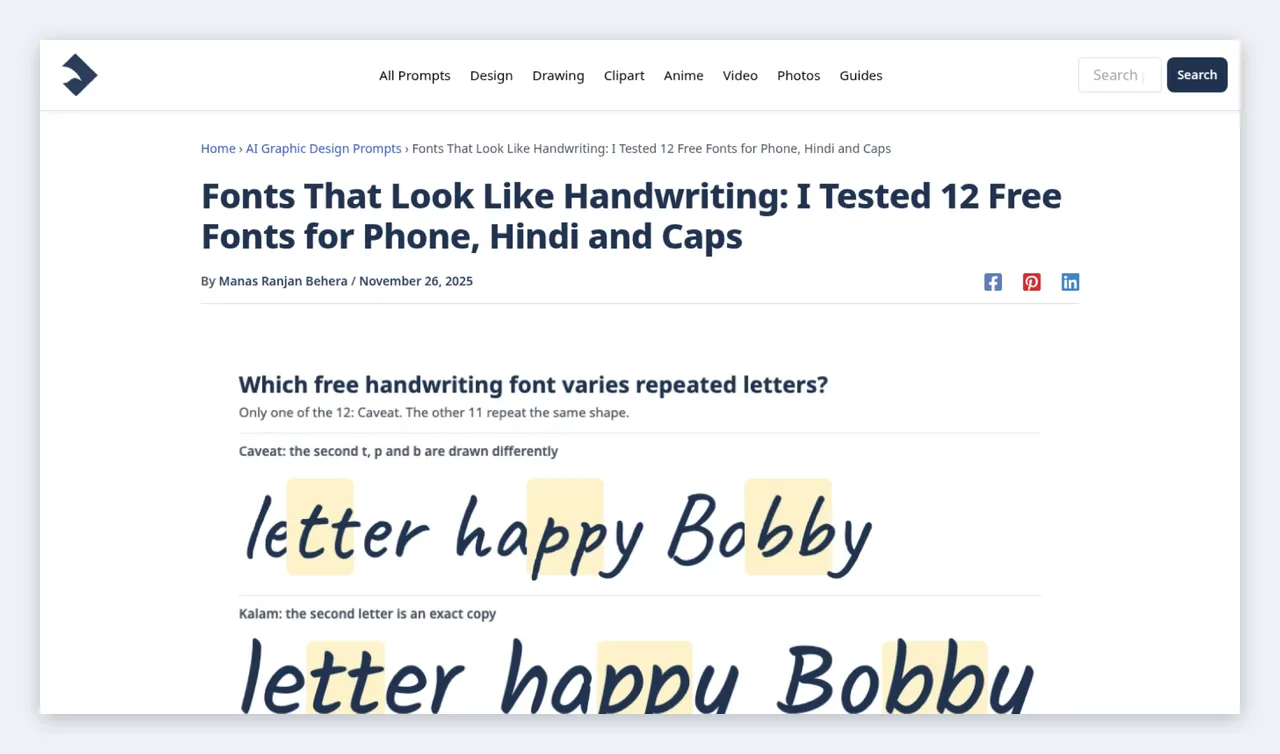
Canva’s import took about 6 seconds and gave me a single page: a picture of the top of my post, including the site menu, cut off after the first image. None of the text could be edited, and the rest of the post was missing. To get a blog post into a Canva eBook, you have to copy the text in yourself.
2. From pasted text, Canva’s AI made a good eBook fast
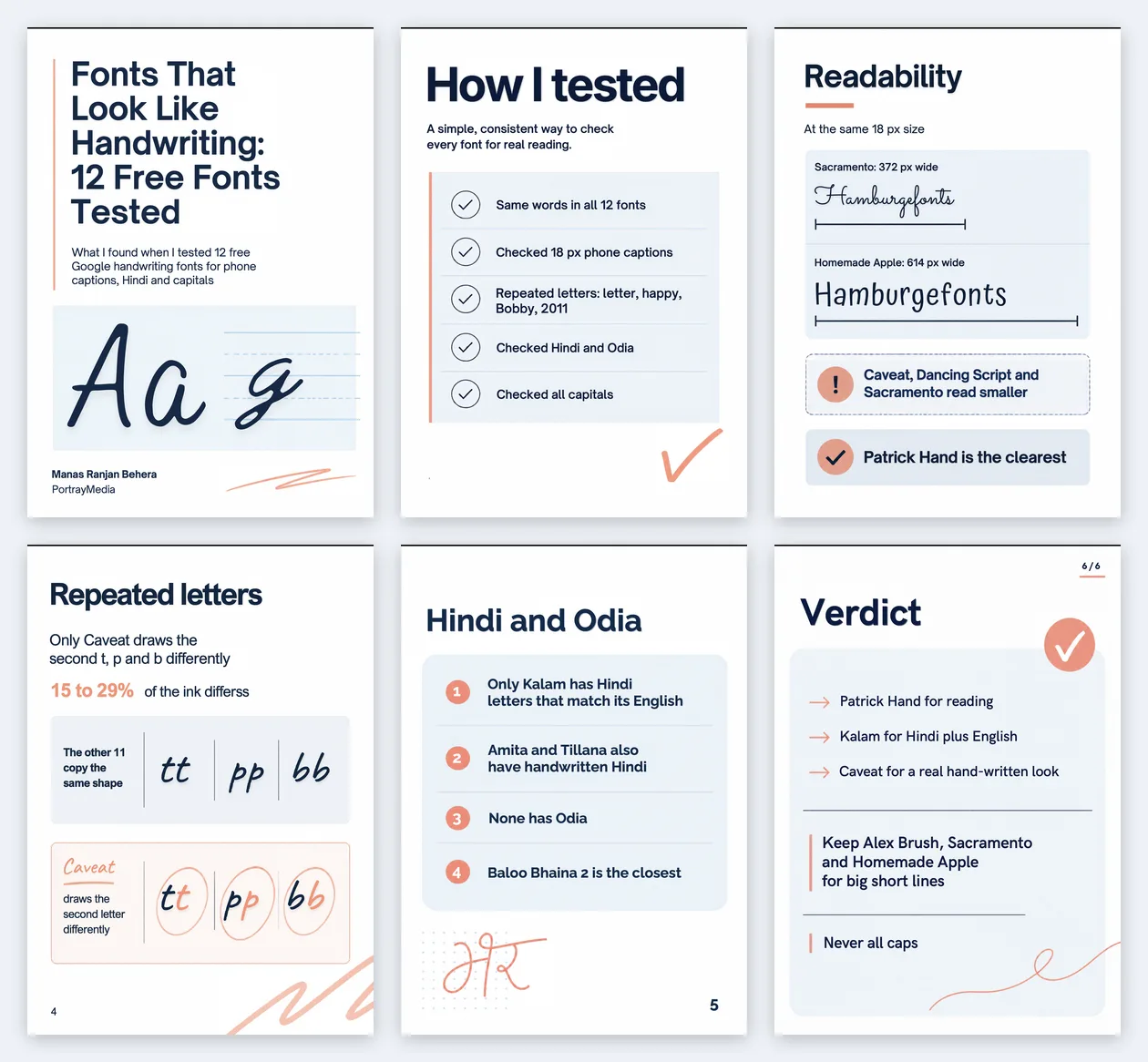
With my 230-word summary, Canva made six A4 pages in about 40 seconds: a cover, a checklist page, a page comparing two fonts, a page showing the double-letter test, a numbered Hindi and Odia page and a verdict page. It kept my numbers right (372 px, 614 px, 15 to 29%), and the layout was clean enough to share after a few fixes.
3. Proofread it: the AI added mistakes
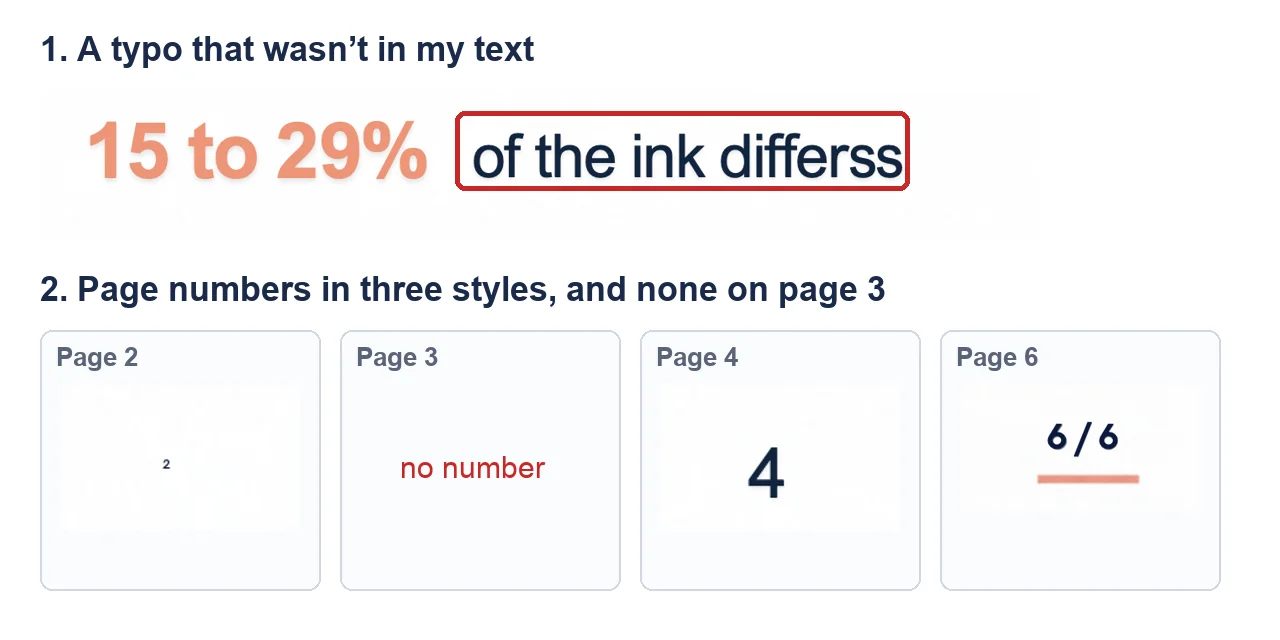
Canva’s AI wrote “of the ink differss”, a typo that wasn’t in my text. The page numbers were also a mess: a tiny “2” on page 2, nothing on page 3, a large “4” and “5”, and “6 / 6” at the top of page 6. These take a minute to fix, but you have to look for them.
4. The PDF: fine on a phone, but heavy and PDF-only
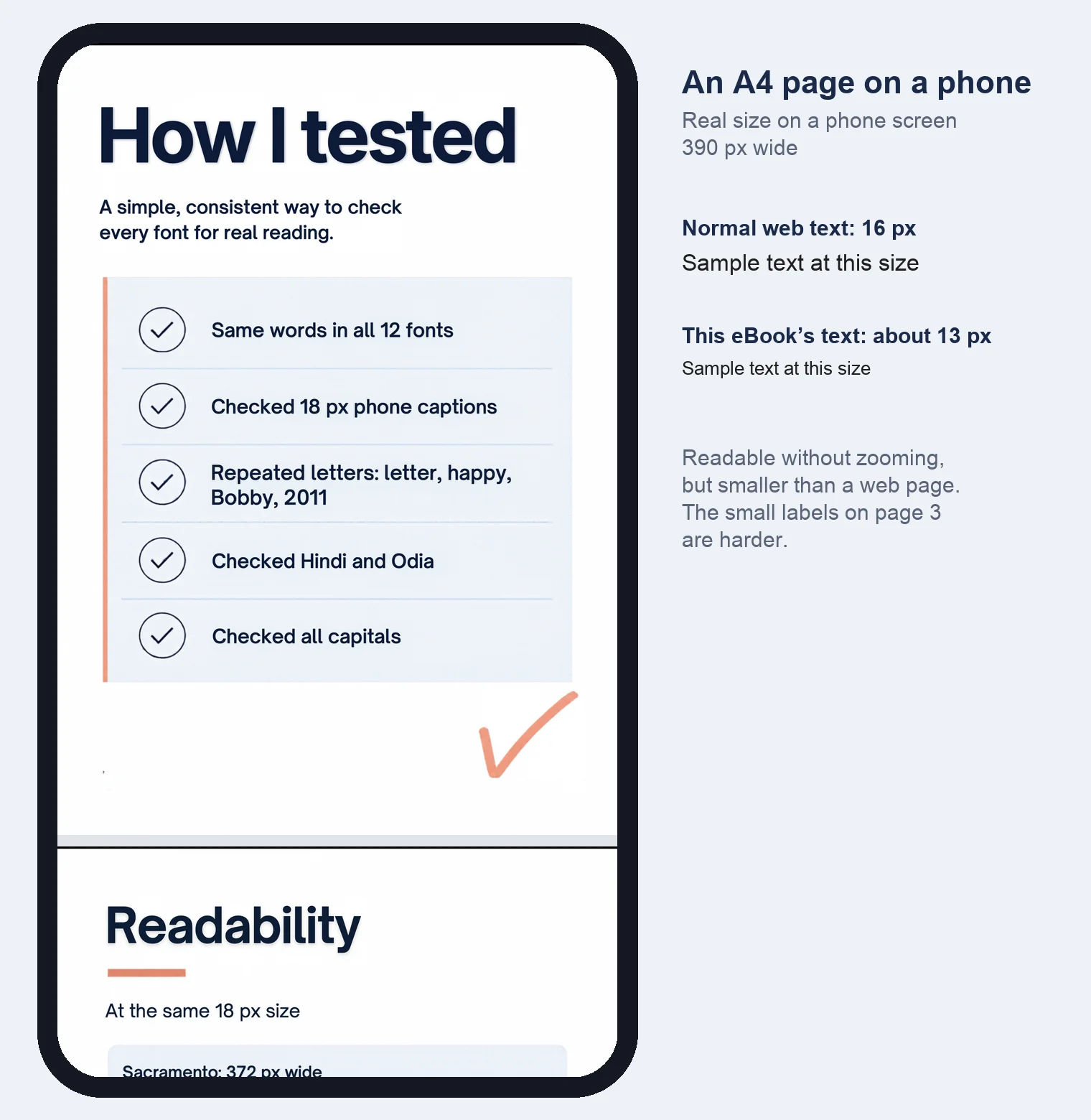
The 6-page PDF was 8.3 MB. On a phone 390 px wide, an A4 page shrinks to about half its print size, and the text showed at about 13 px. That’s readable without zooming but smaller than a normal web page; the small labels were harder. If you copy text out of the PDF, many lines come out twice, and the PDF’s bookmarks list 37 entries, including stray ones such as “Aa” and “tt”.
Canva can’t make a Kindle or ePub file. Its help centre says ebooks download as PDF only, and you need a separate tool for ePub or KPF. Designrr’s pricing page lists Kindle and ePub export from its Pro plan ($39 a month); the $29 Standard plan doesn’t list them.
How to Make an eBook in Canva
Canva suits you if you want control over how every page looks.
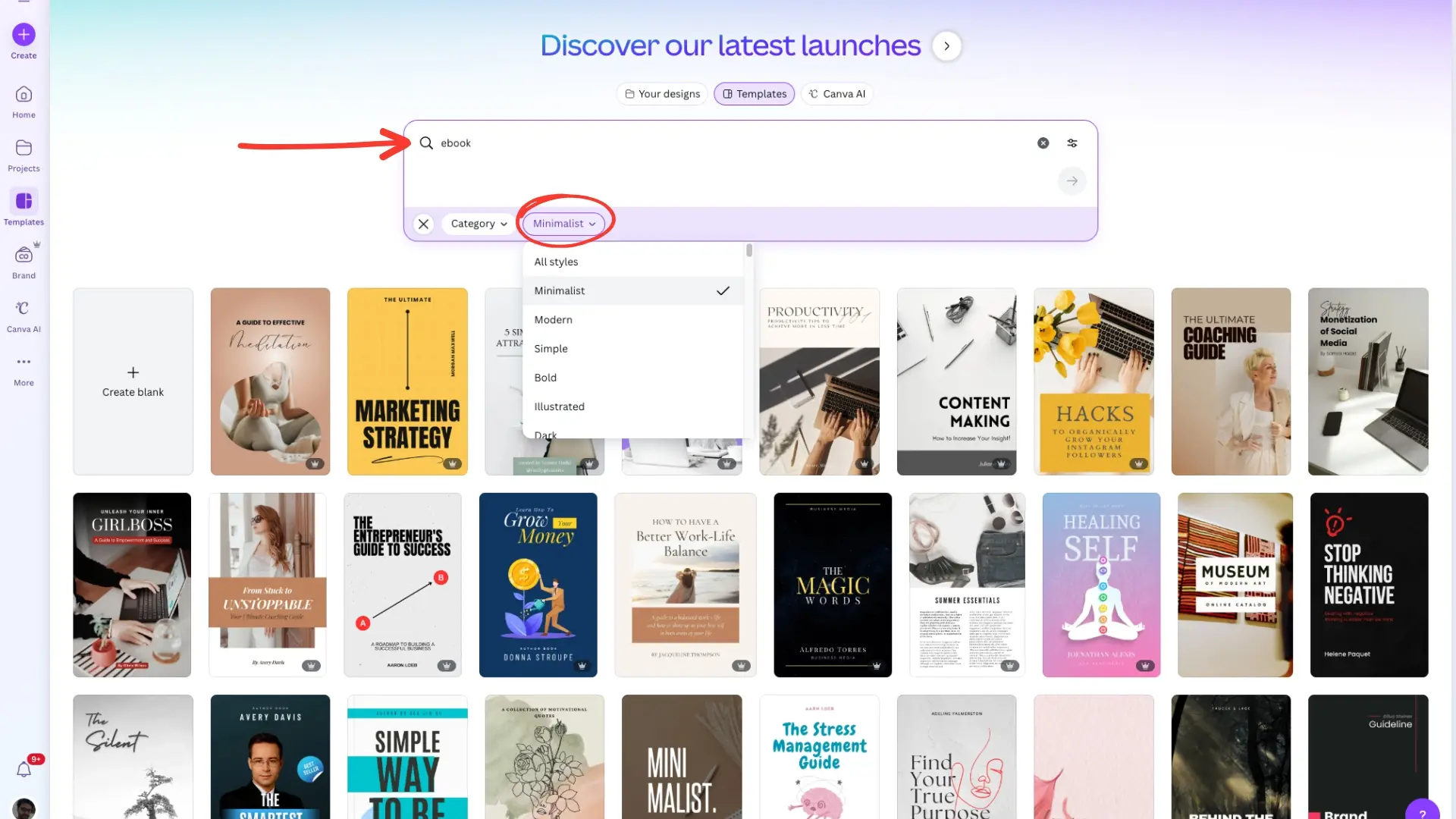
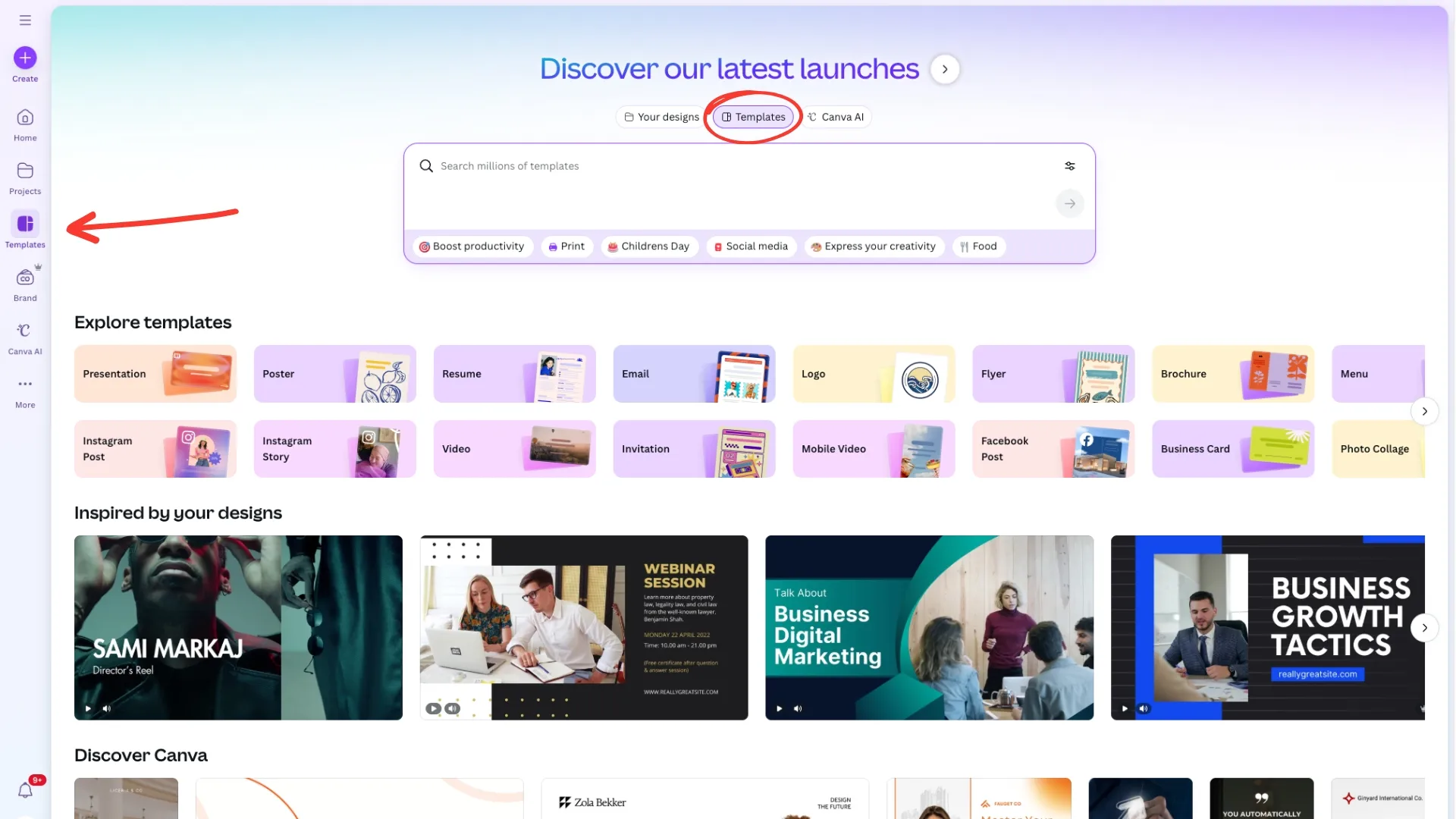
Step 1: Choose a template. Open Templates and search for “eBook”. Use the Category and Style filters to narrow the results, then pick a design that fits your topic.
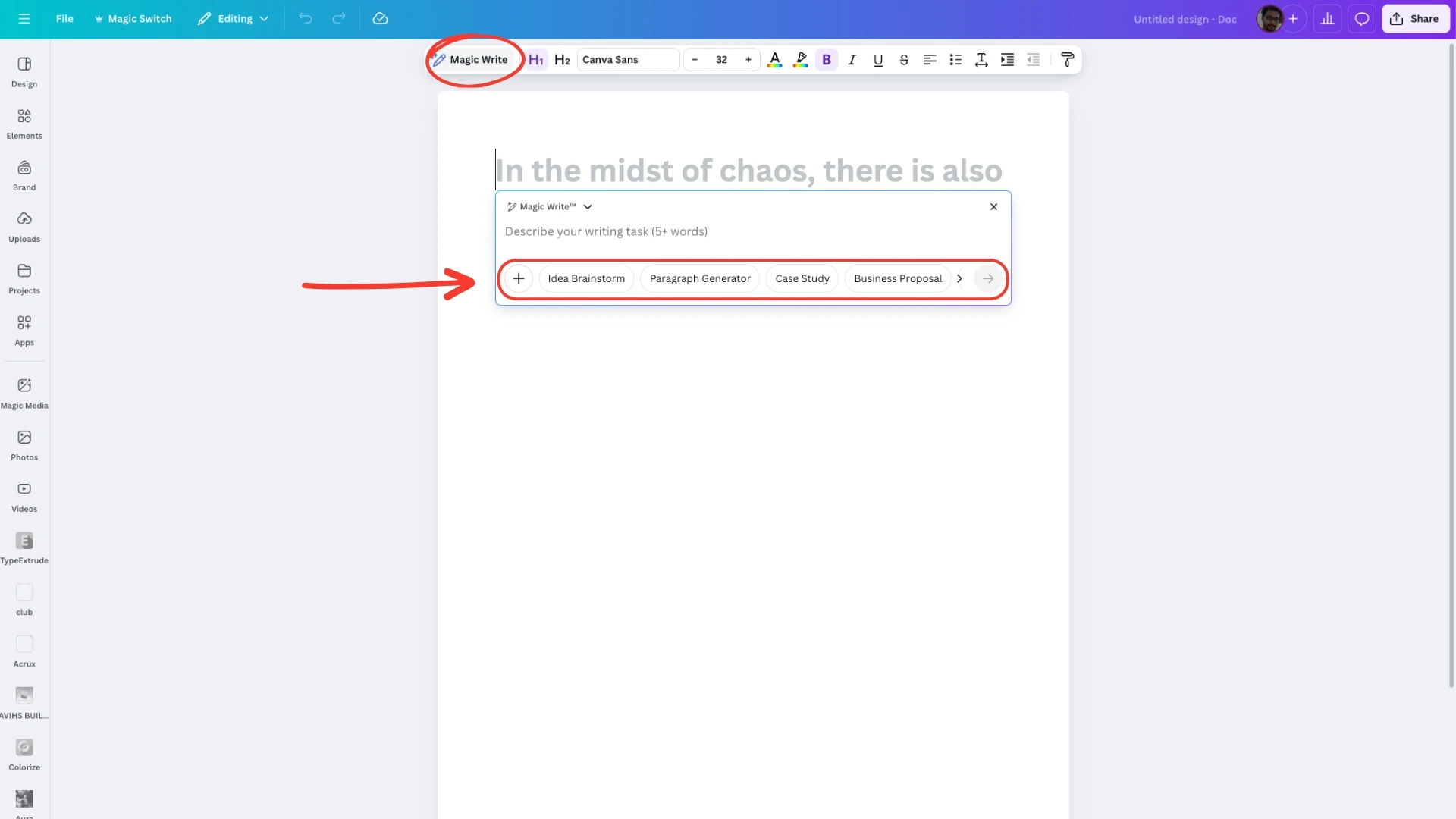
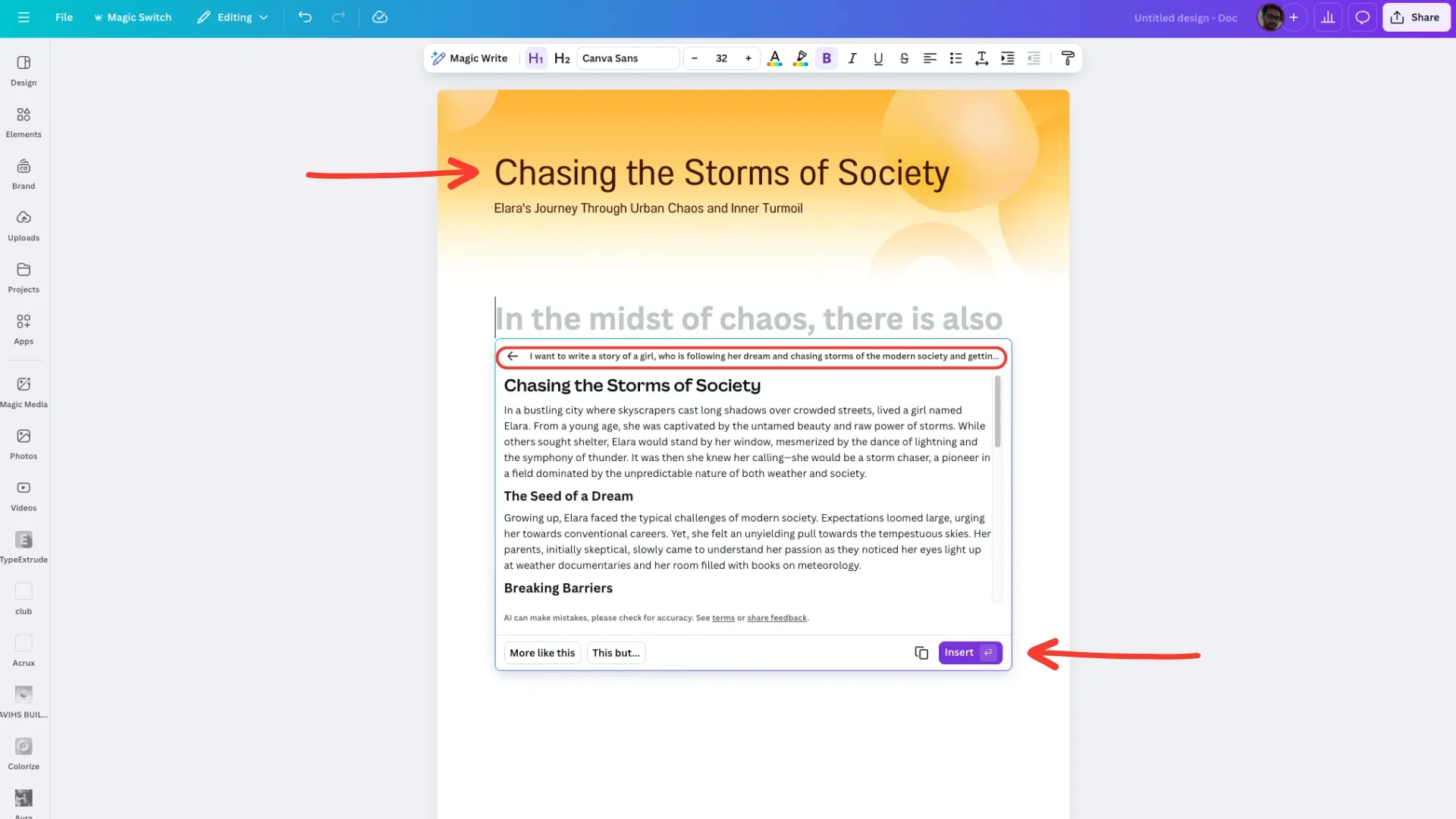
Step 2: Draft with Magic Write. Open Canva Docs and use Magic Write to create titles, outlines, descriptions or summaries. It has ready-made options for ideas, paragraphs, case studies, blog posts and more.
You can also type your own prompt, then edit the text.
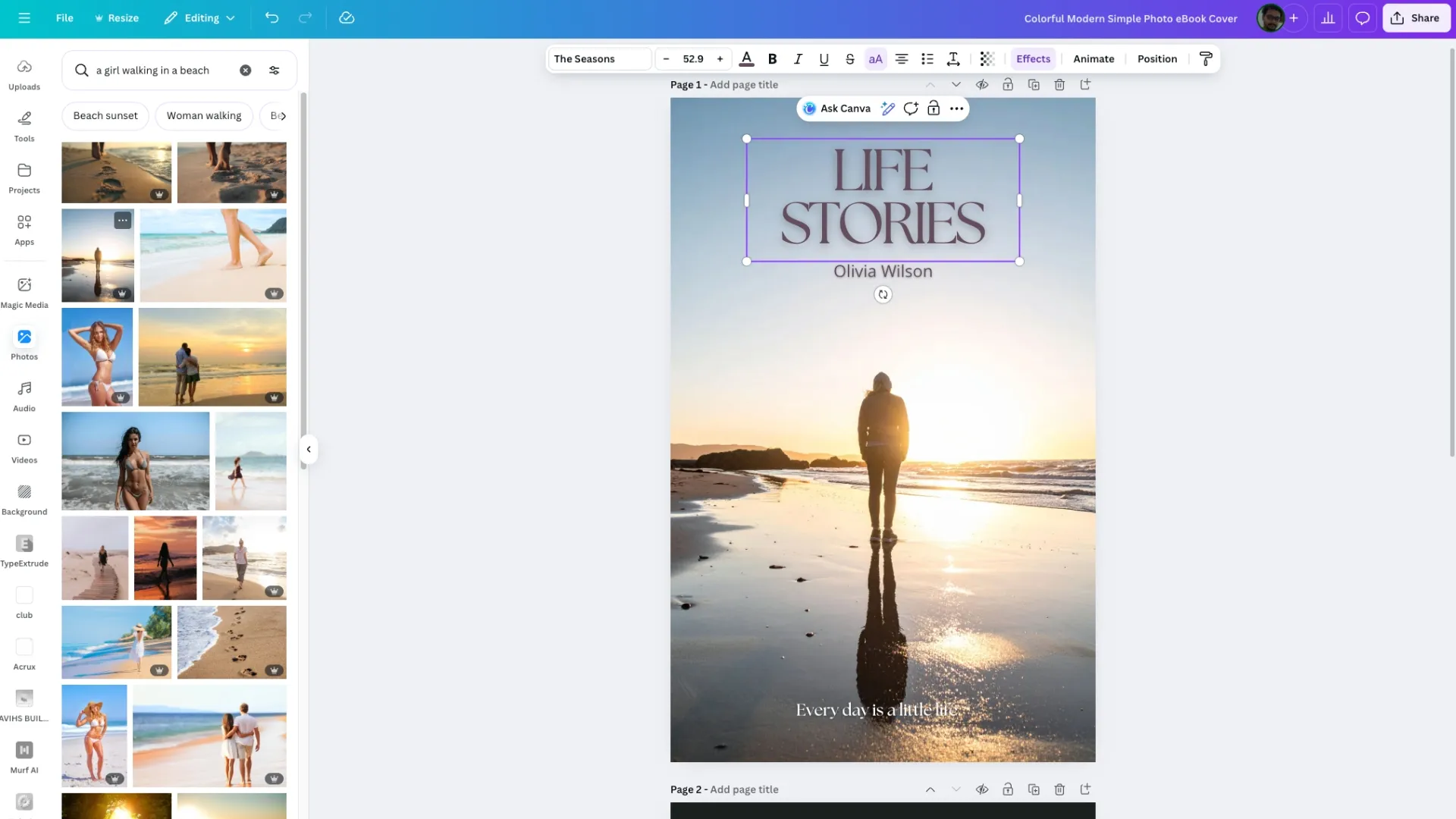
Step 3: Customize the design. Start with the cover, because readers see it first. Add stock images, elements, icons and your brand colours, and use grids and frames to keep each page consistent.
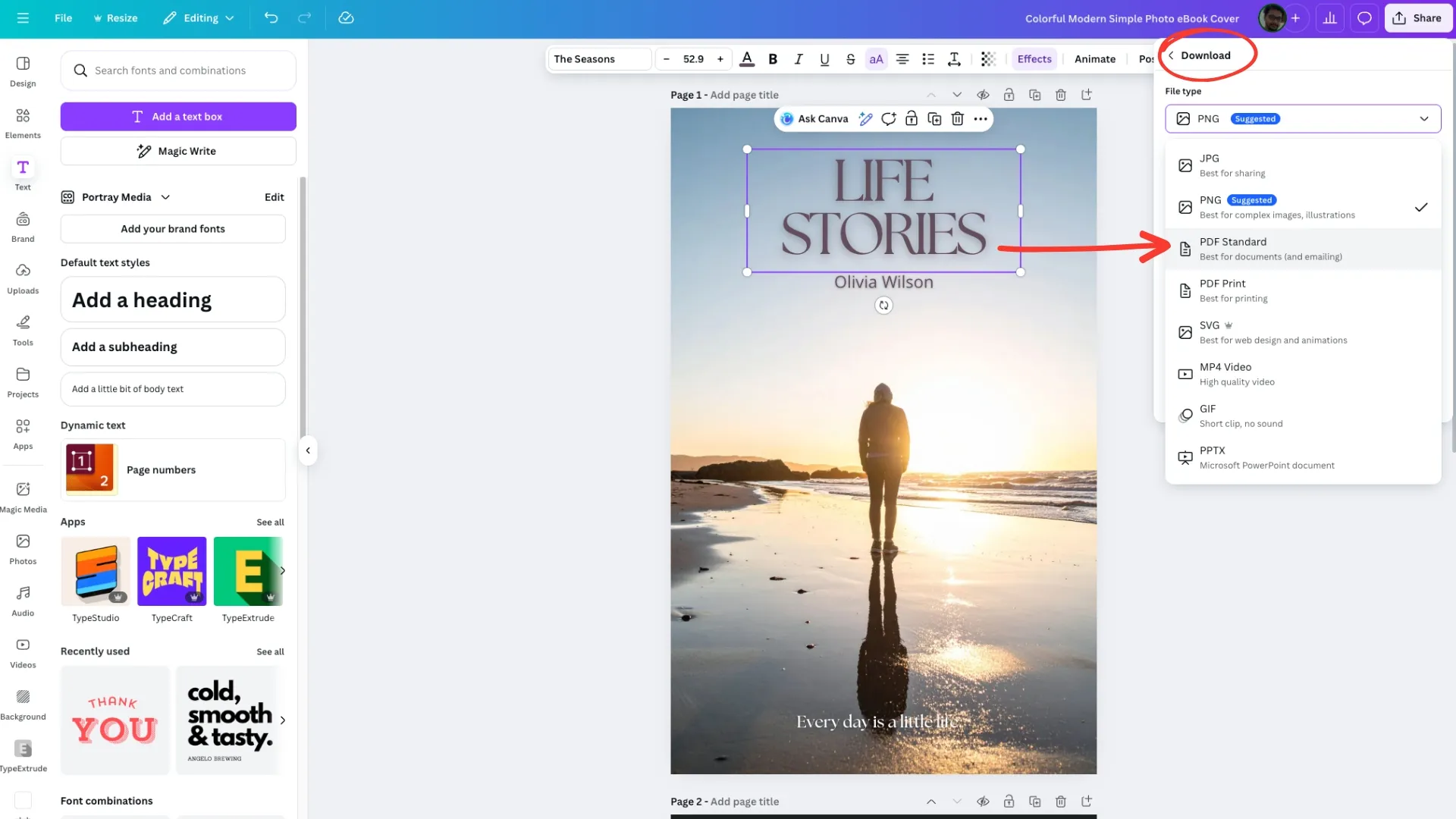
Step 4: Export or share. PDF is the usual format for an eBook. You can also invite others to review the design.
How to Make an eBook in Designrr
Designrr suits you if you already have content, or want help creating a structured draft.
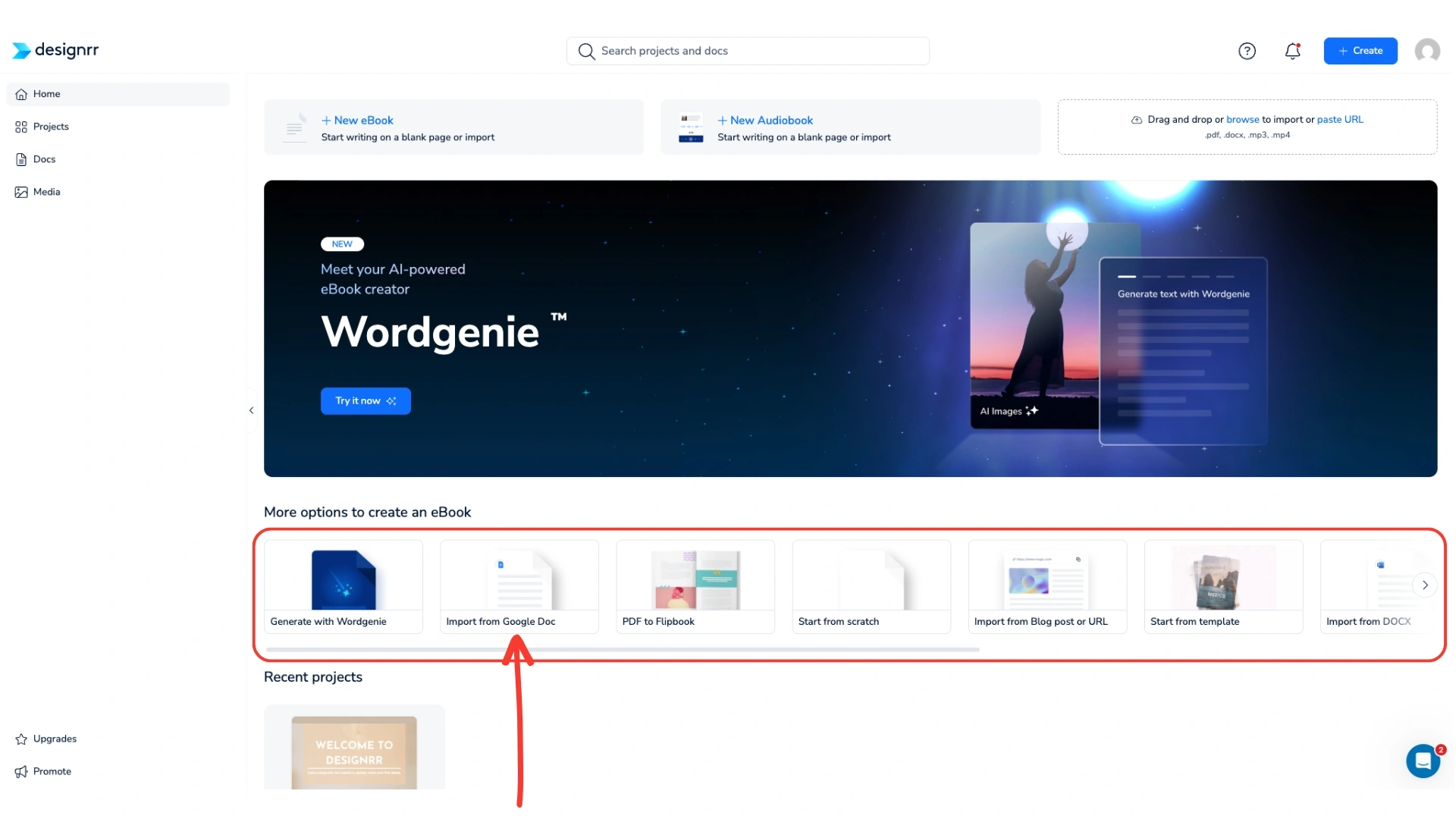
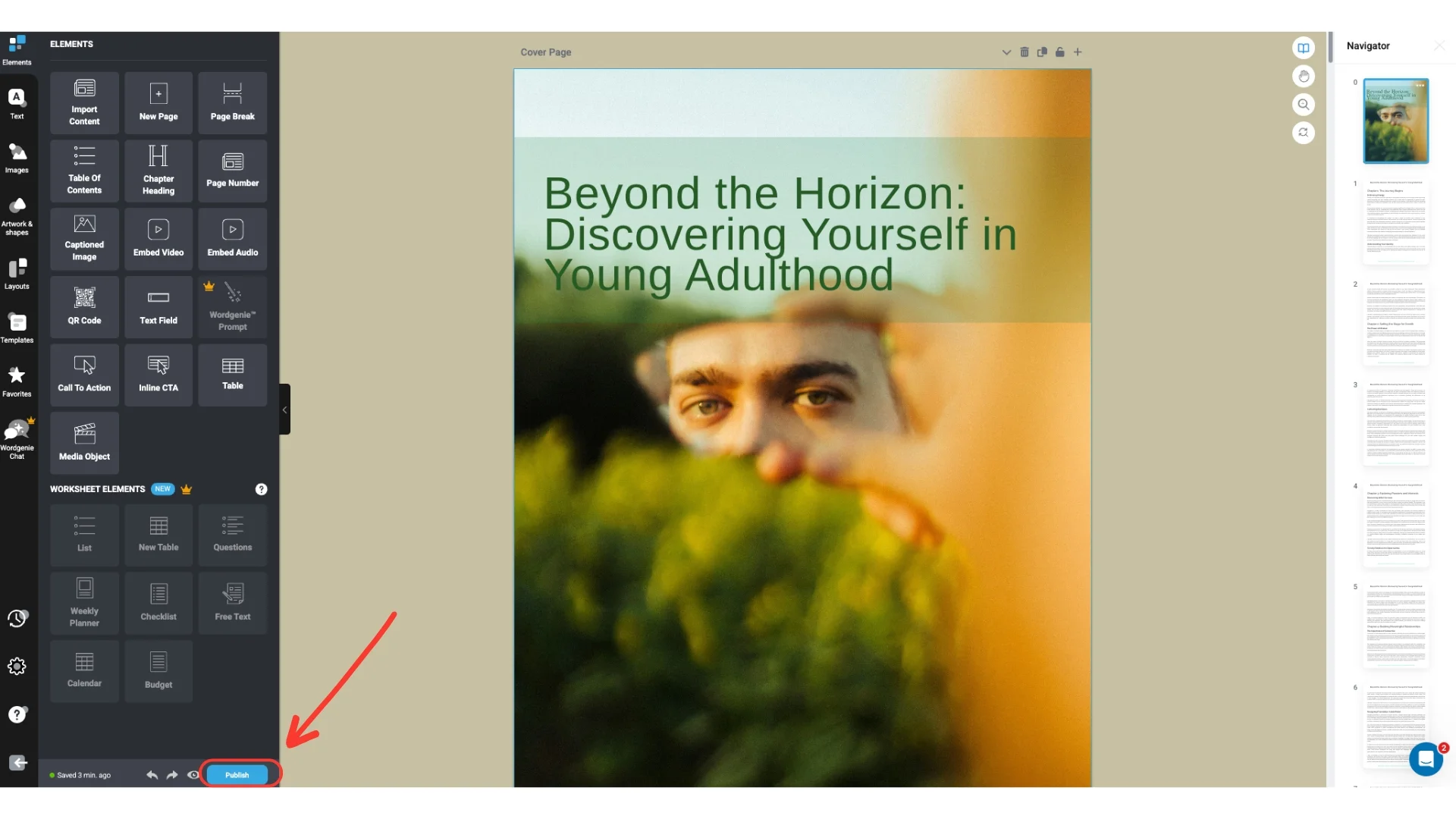
Step 1: Create a project. Import from Google Docs, a blog post or URL, a DOCX or PDF file, a video, a podcast or YouTube. You can also start from a template or with the Wordgenie AI tool.
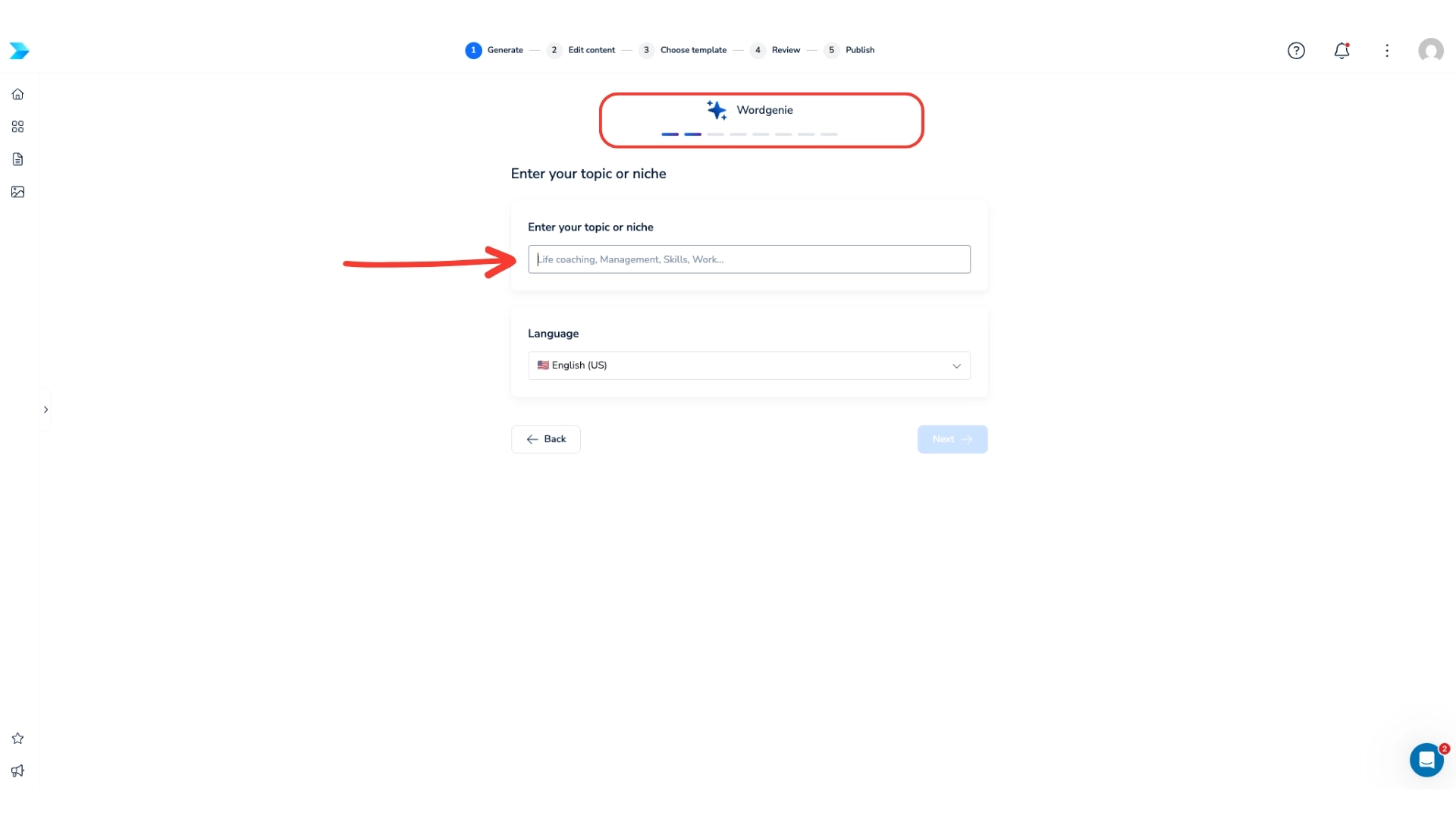
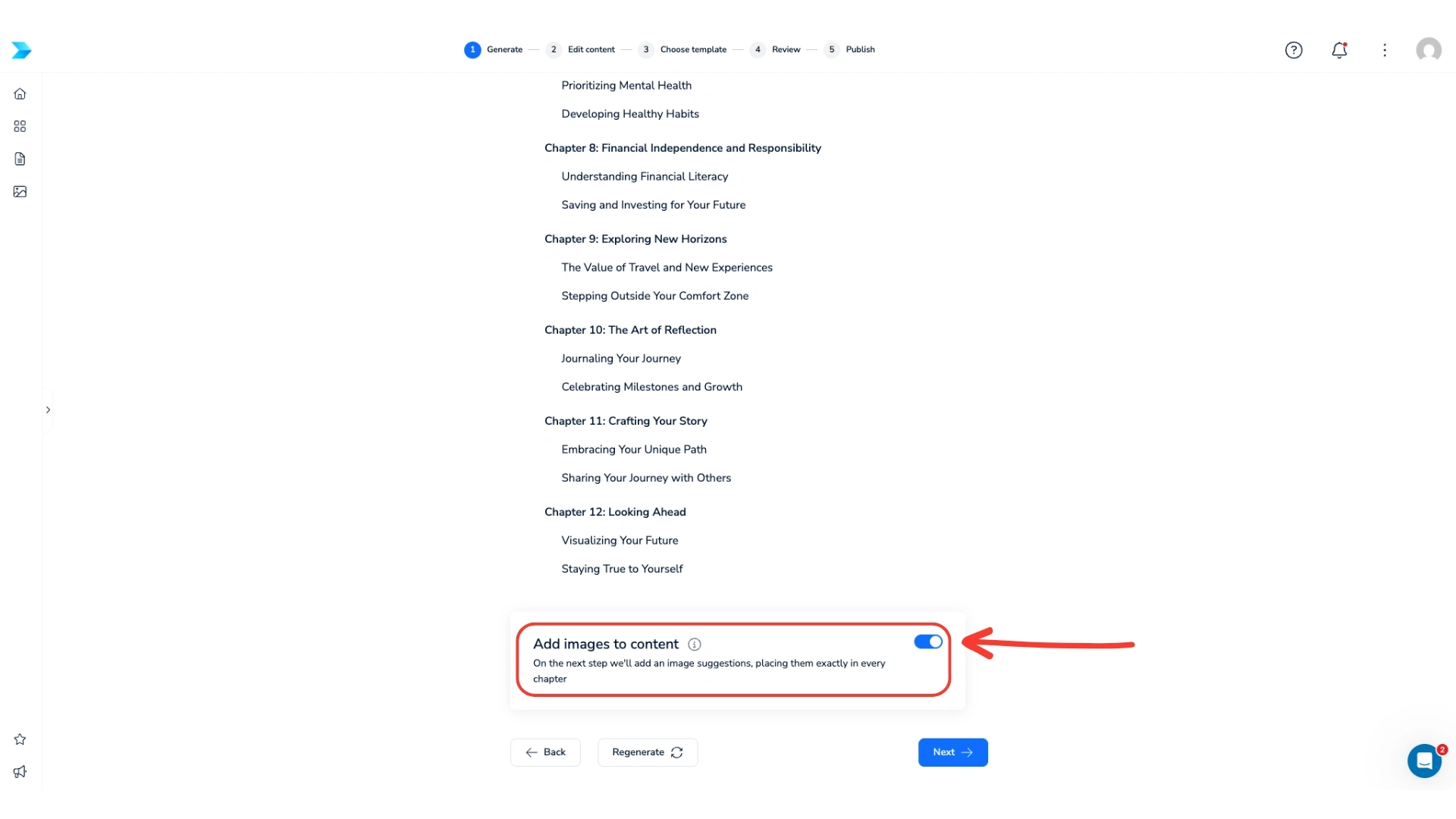
Step 2: Build a draft with Wordgenie. Start with a main topic, such as health, management or coaching.
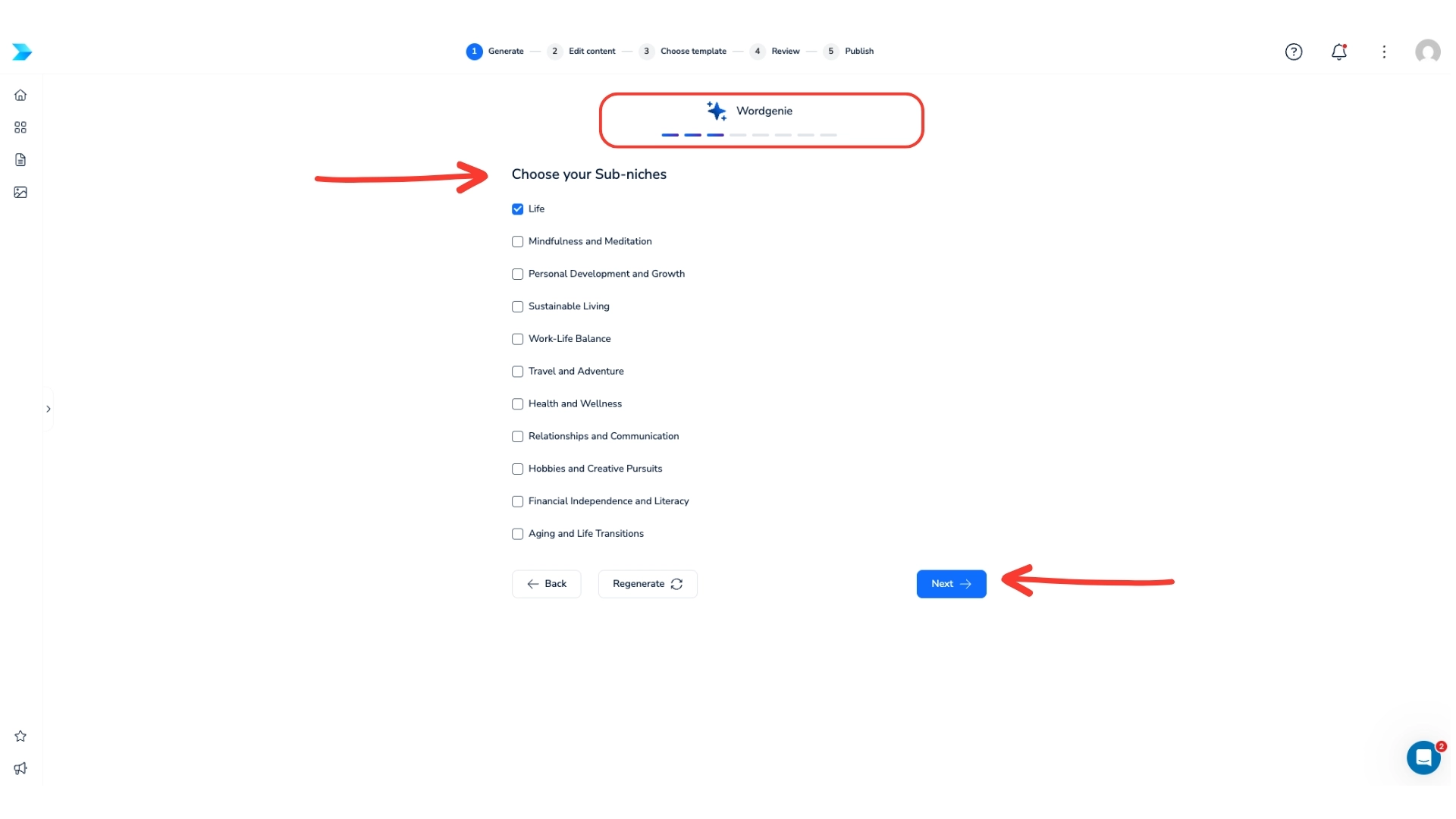
Choose a sub-niche to narrow the subject.
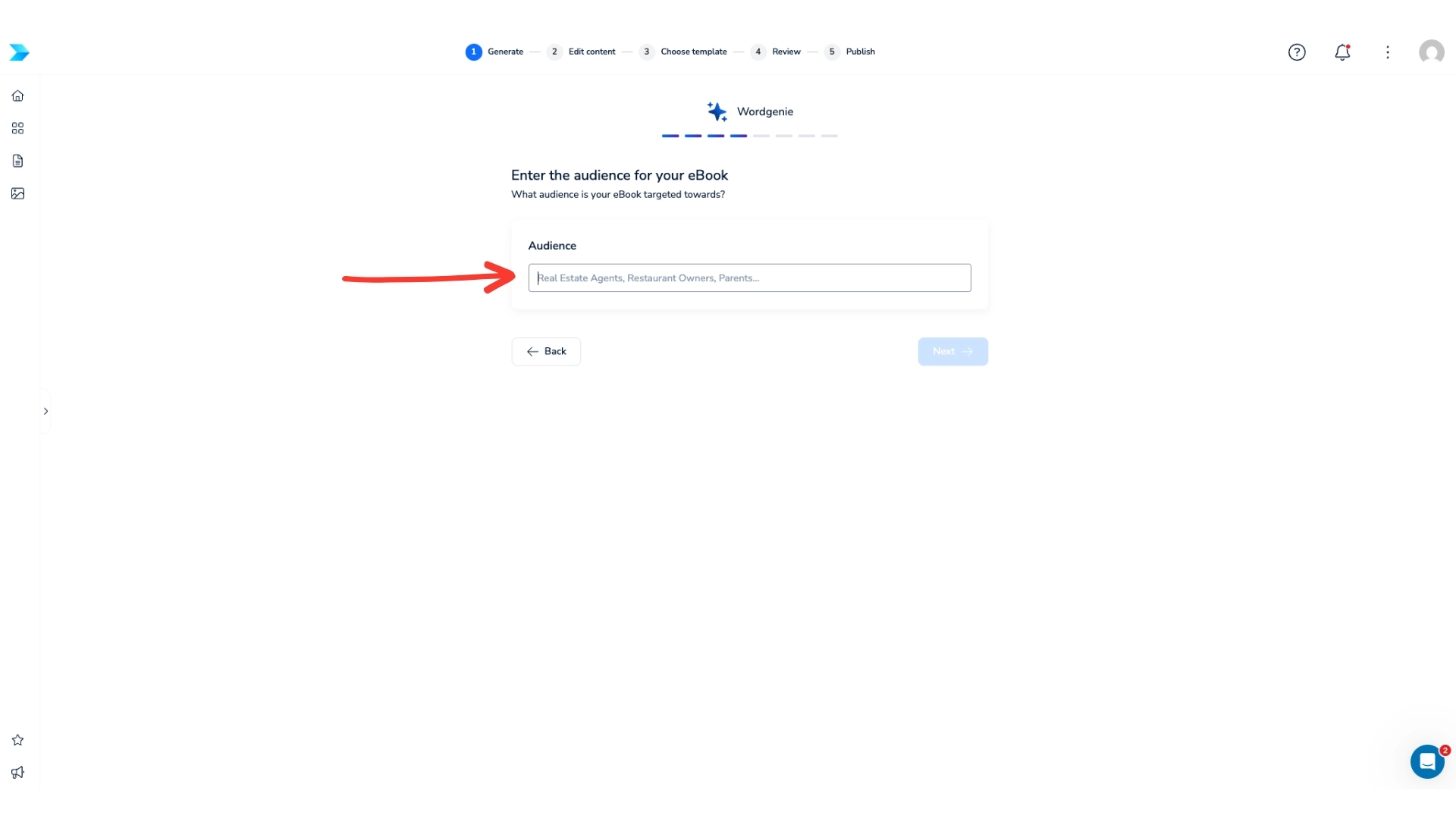
Choose your target audience, such as business owners, parents or young people.
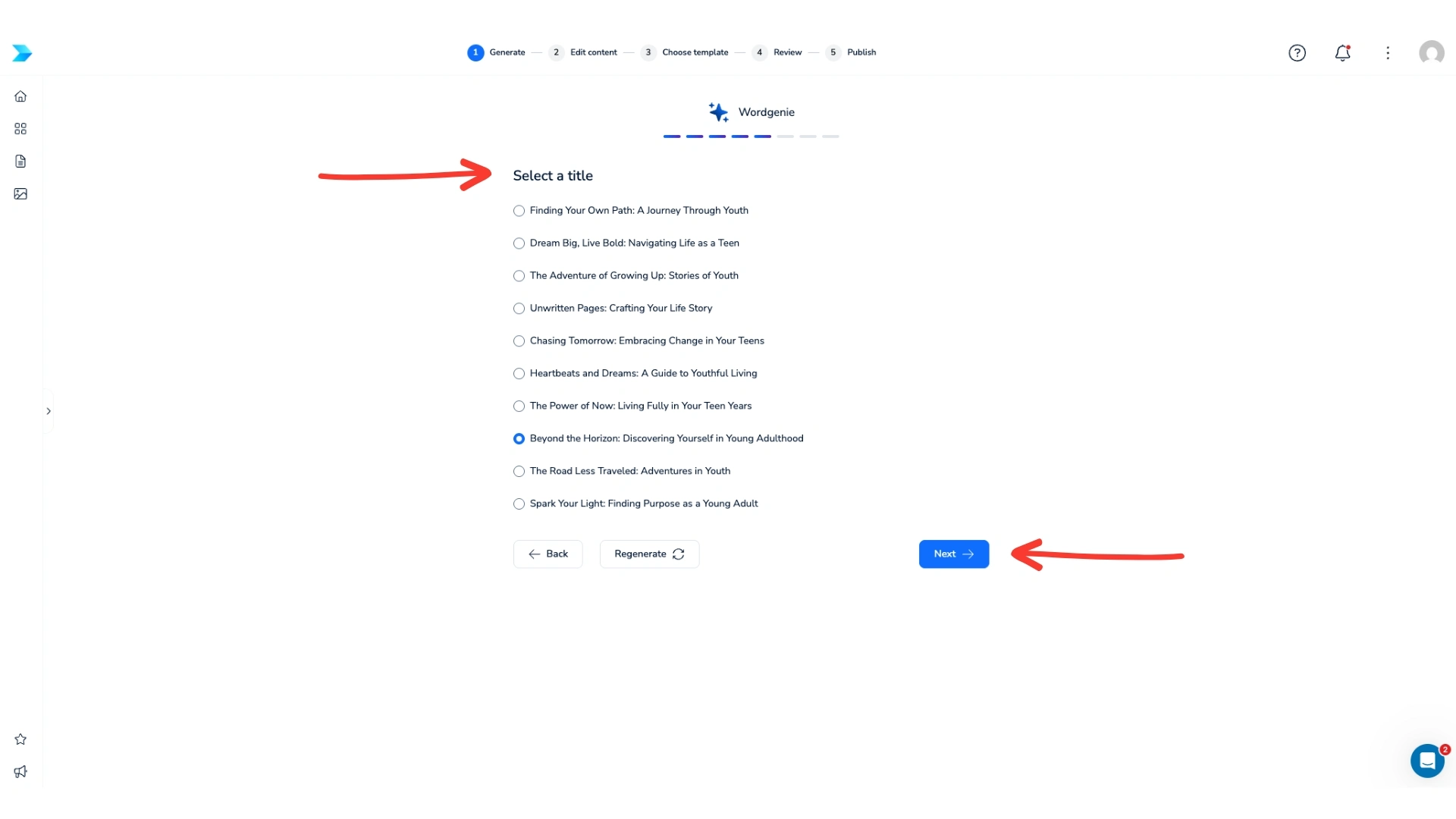
Select a suggested title, or regenerate the list for new options.
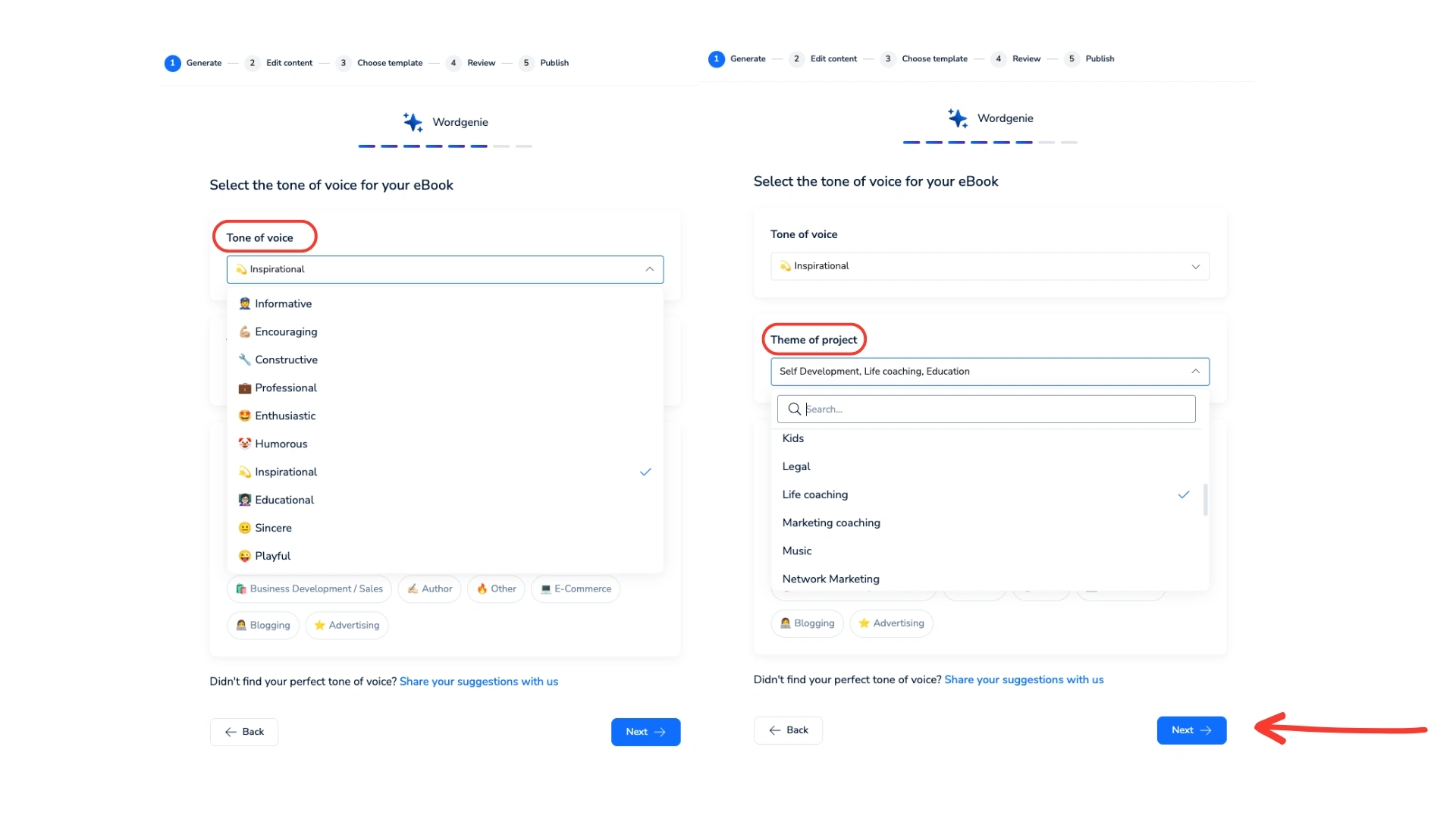
Choose a tone and theme.
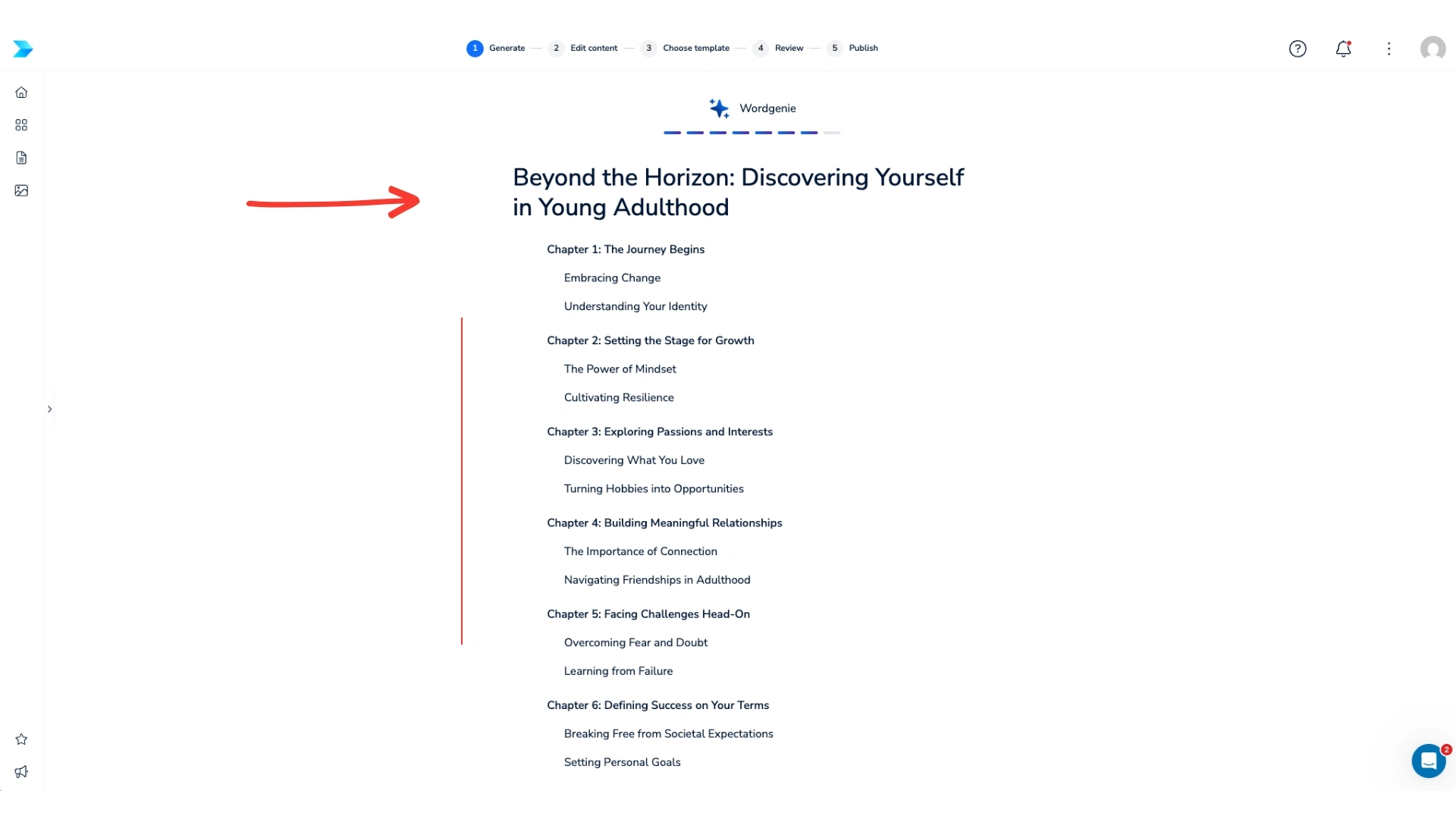
Wait a few minutes for the draft.
Tick “Add images to content” at the bottom of the page to place relevant images throughout the eBook.
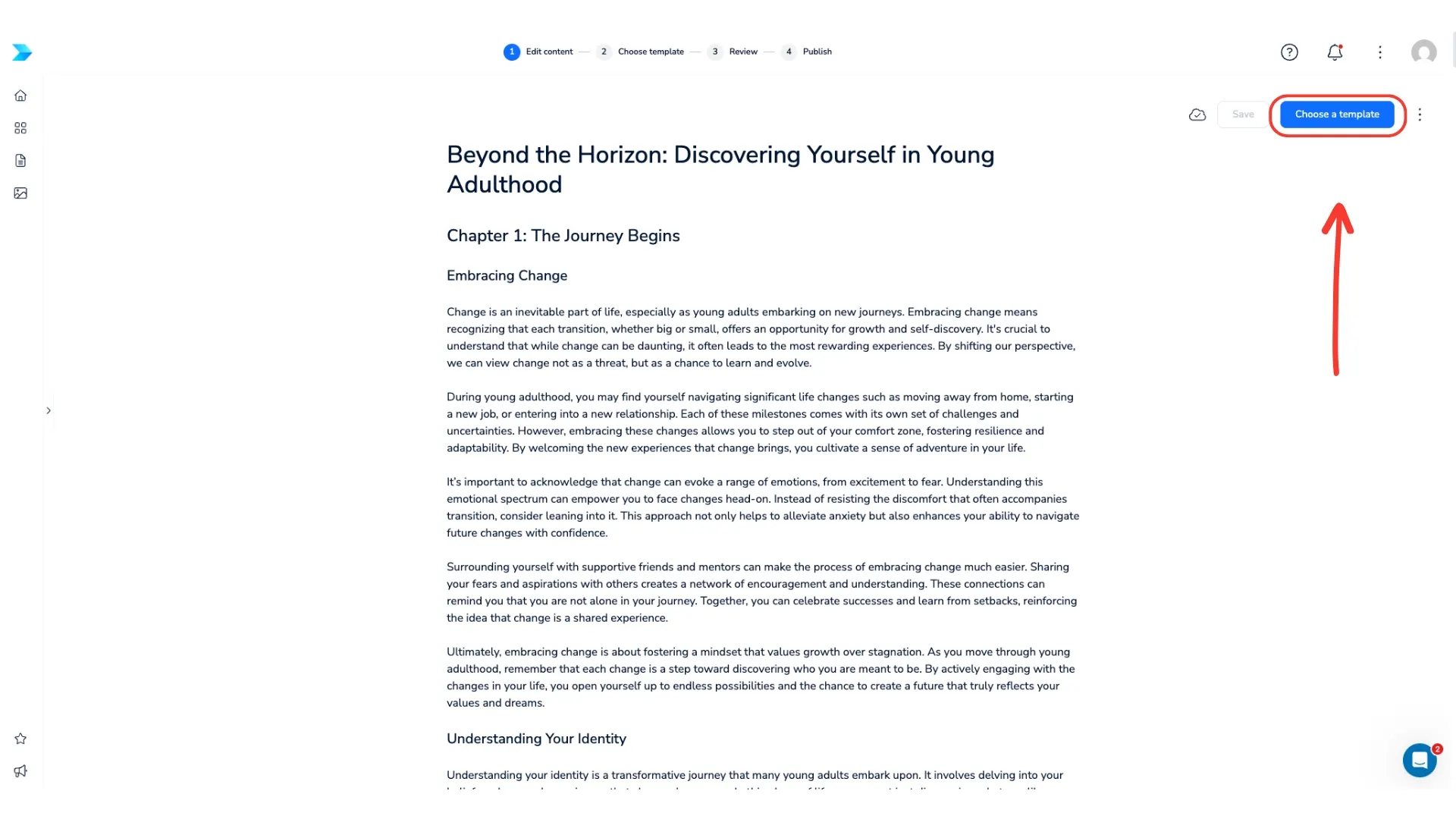
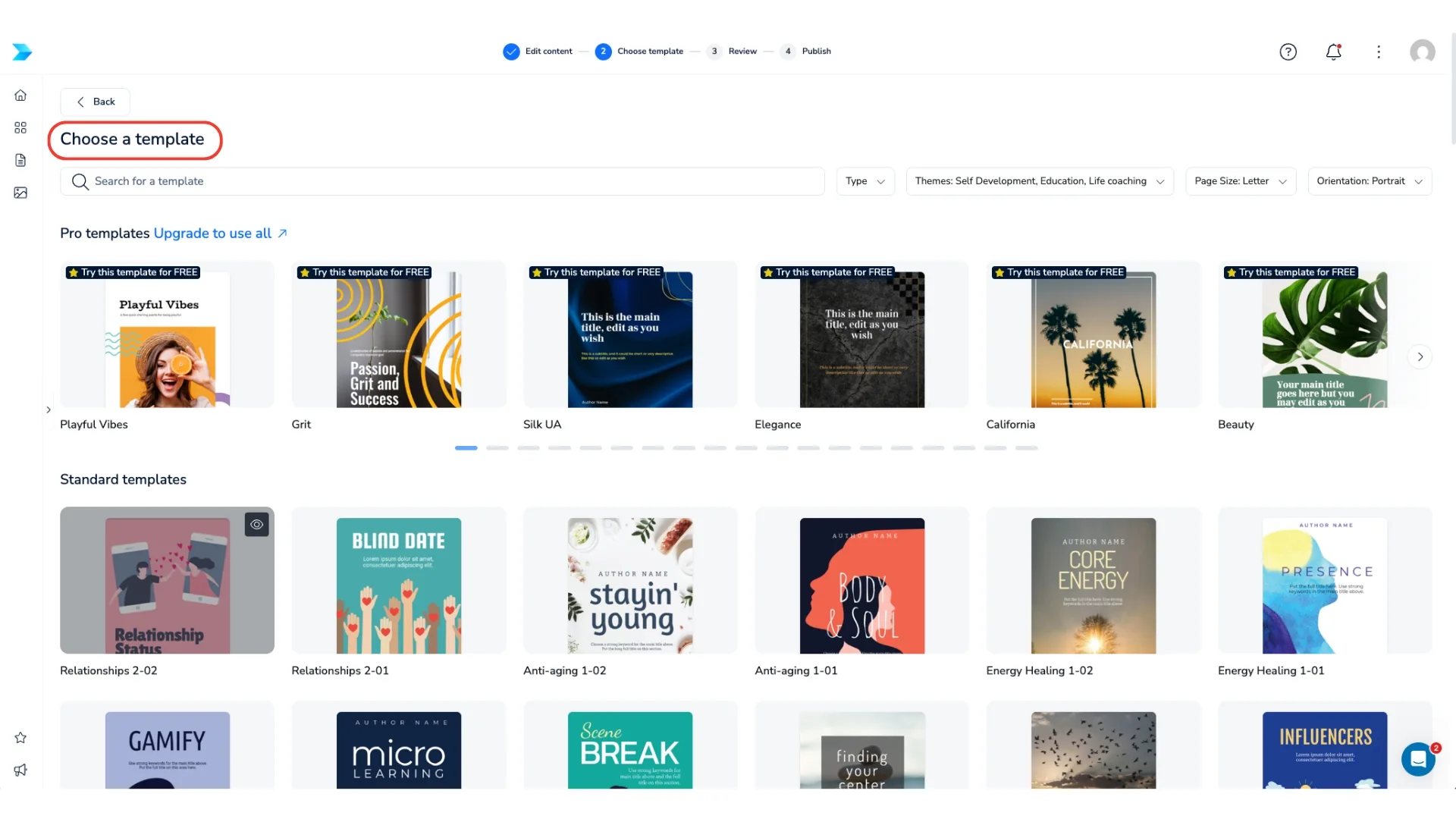
Step 3: Apply a template. Pick a professional layout from the available categories. Layouts can include a table of contents, headers and footers.
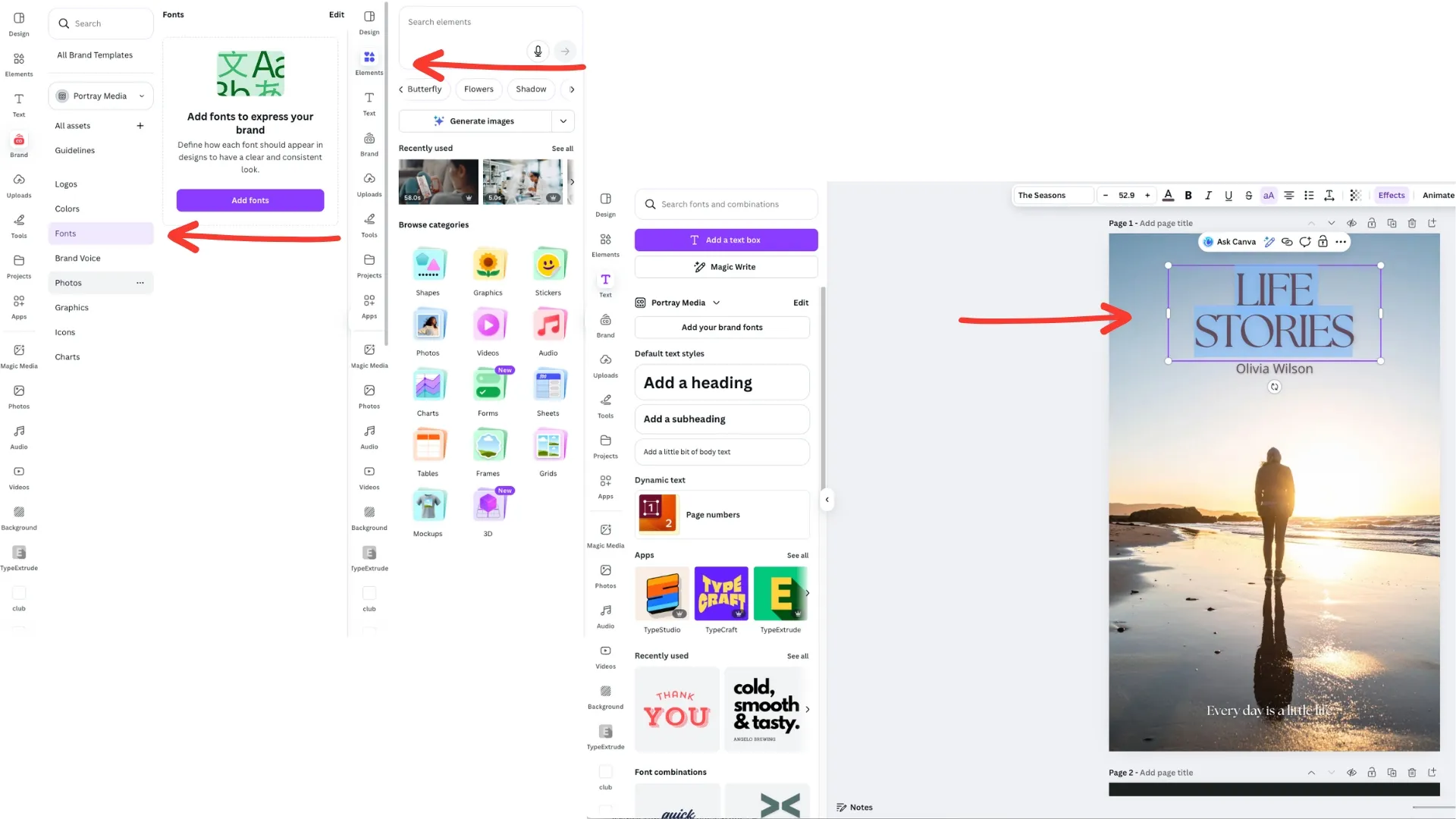
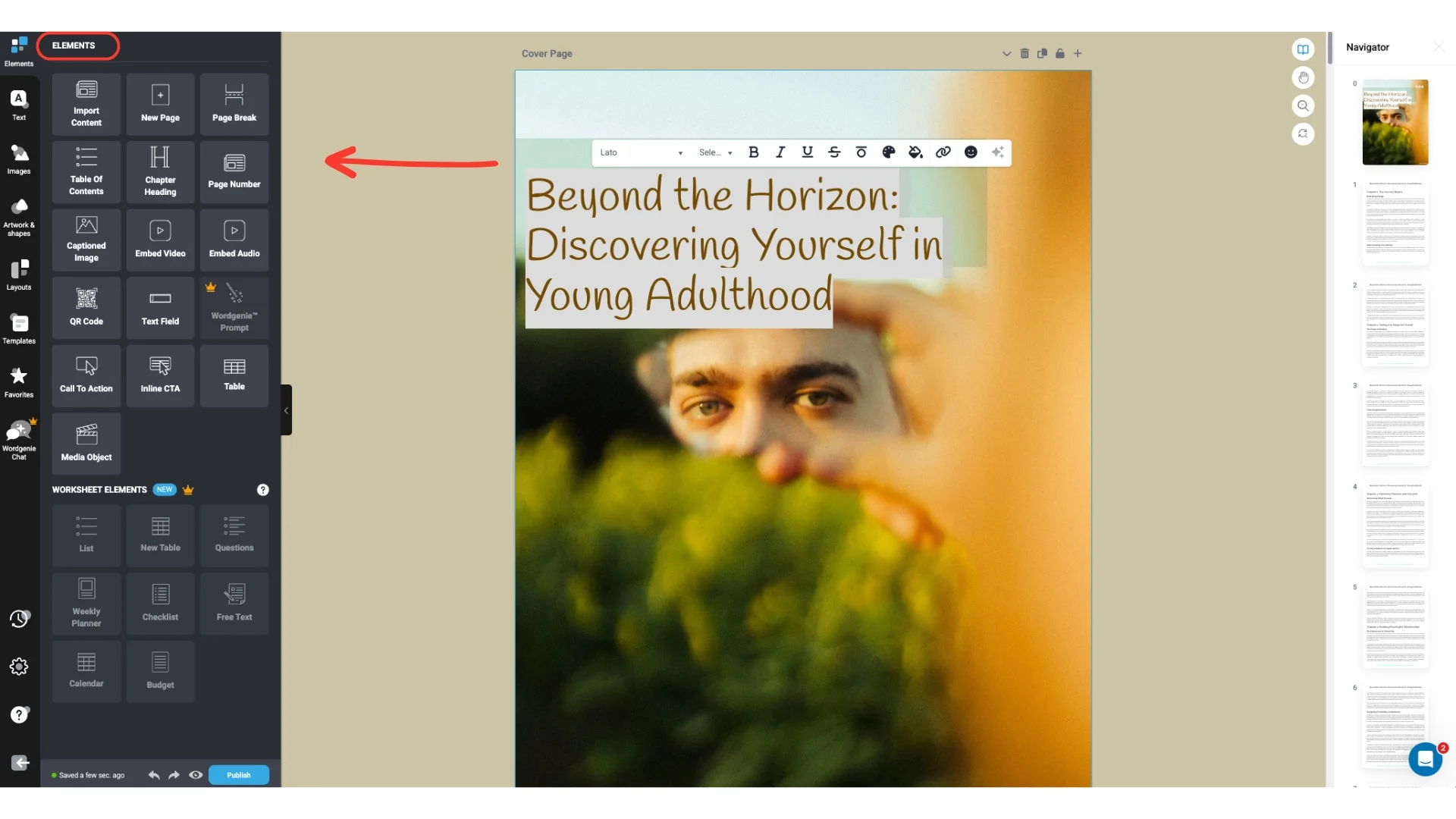
Then customize the logos, fonts, colours and images.
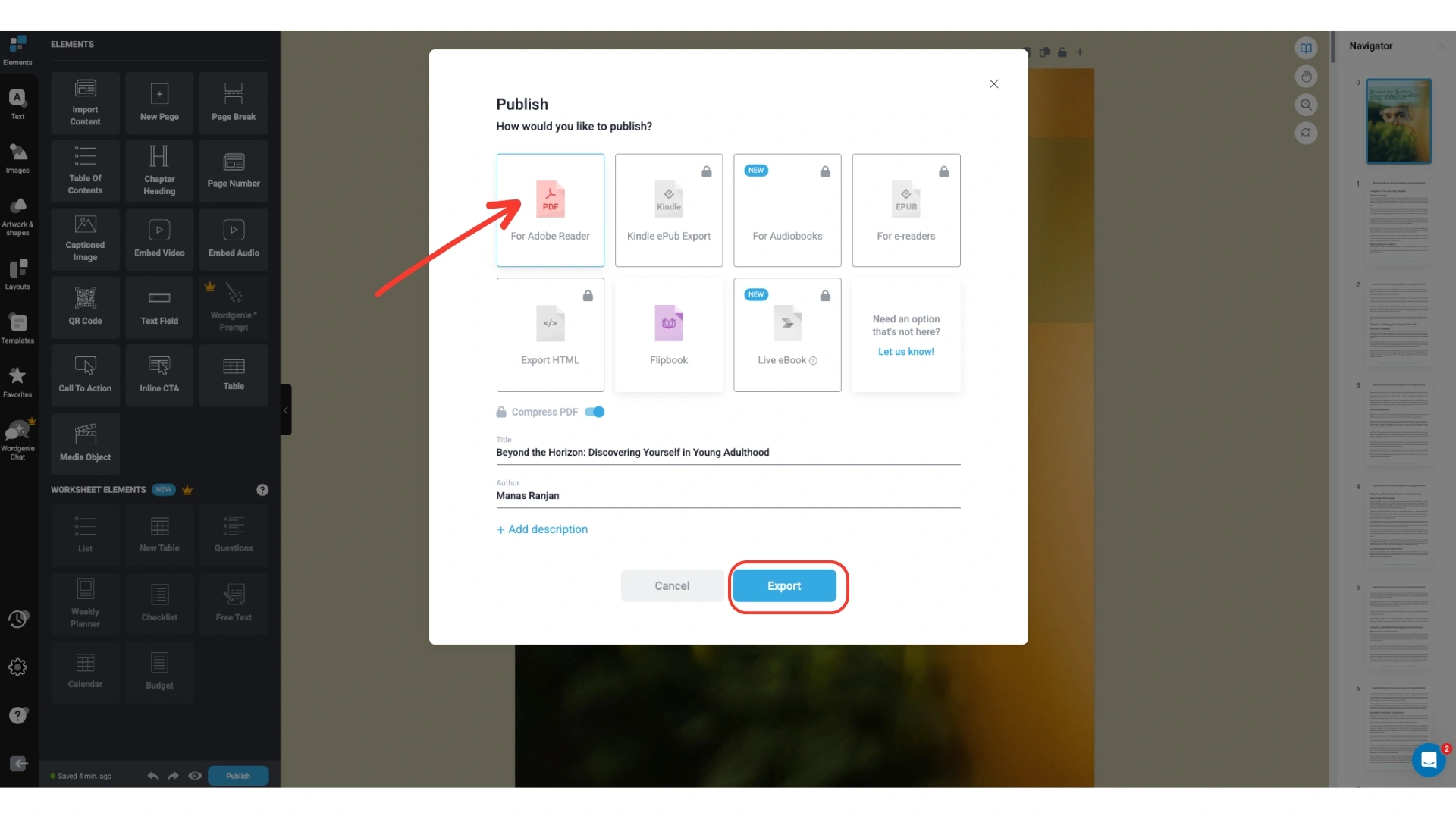
Designrr can export to the formats below, although some depend on your plan. When I checked on 14 November 2026, its pricing page listed Kindle and ePub export from the Pro plan ($39 a month) up. Canva, by comparison, exports eBooks as PDF only.
- Kindle
- ePub
- Flipbook
- Audio Book
- HTML
- Live eBook
Using Designrr and Canva Together
You can also use both. Build the structure in Designrr, export a clean PDF, then use Canva to polish the cover and make promotional images.
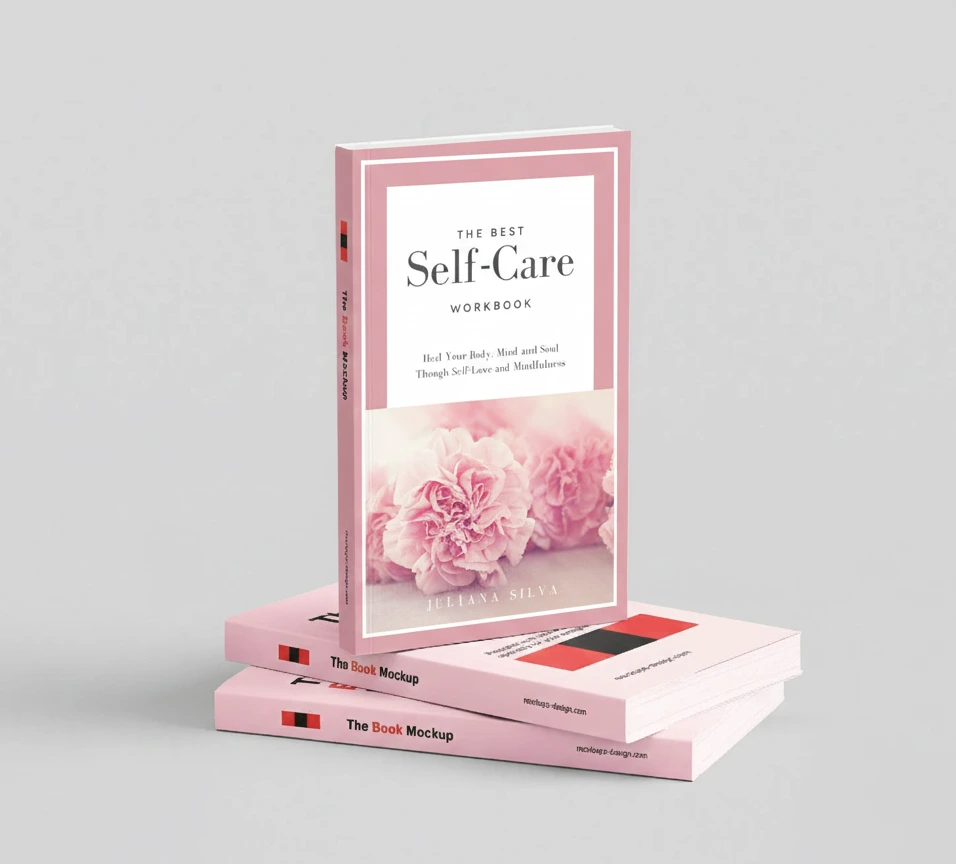
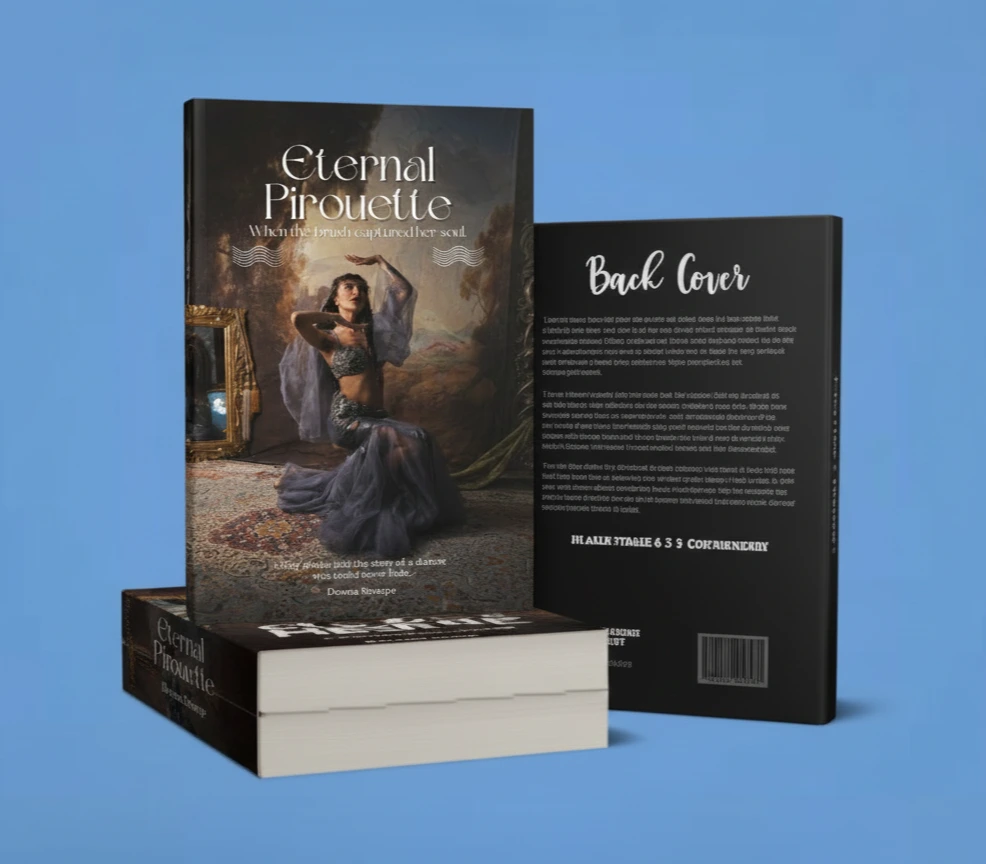
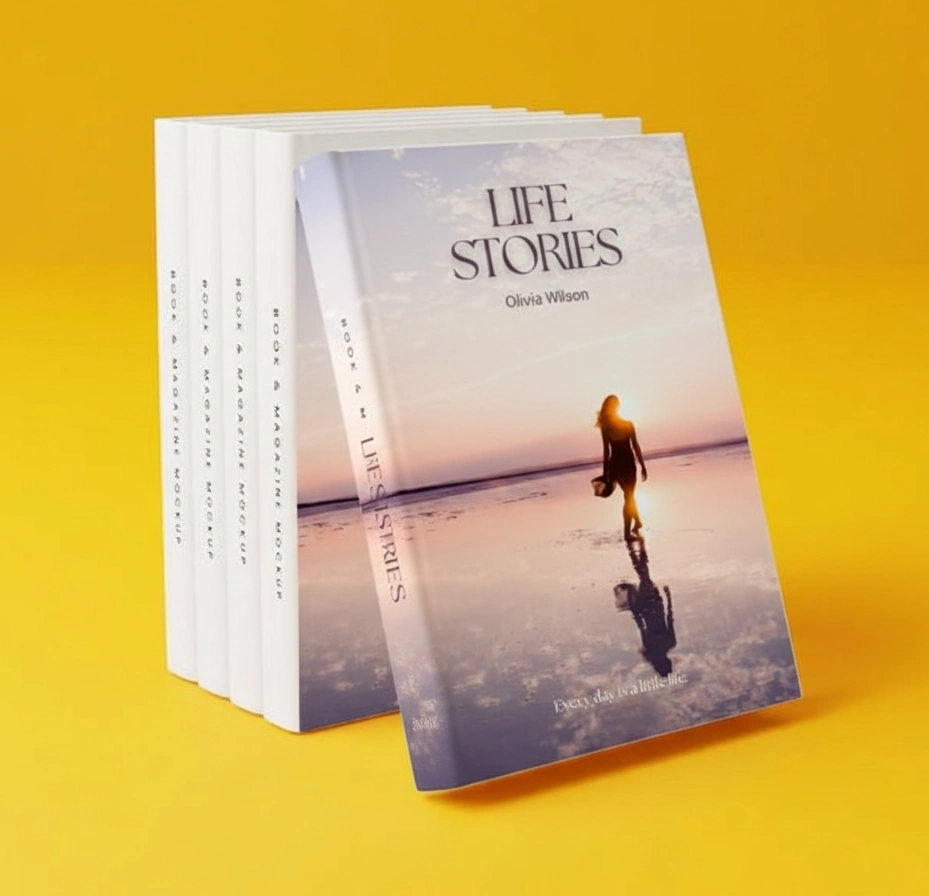
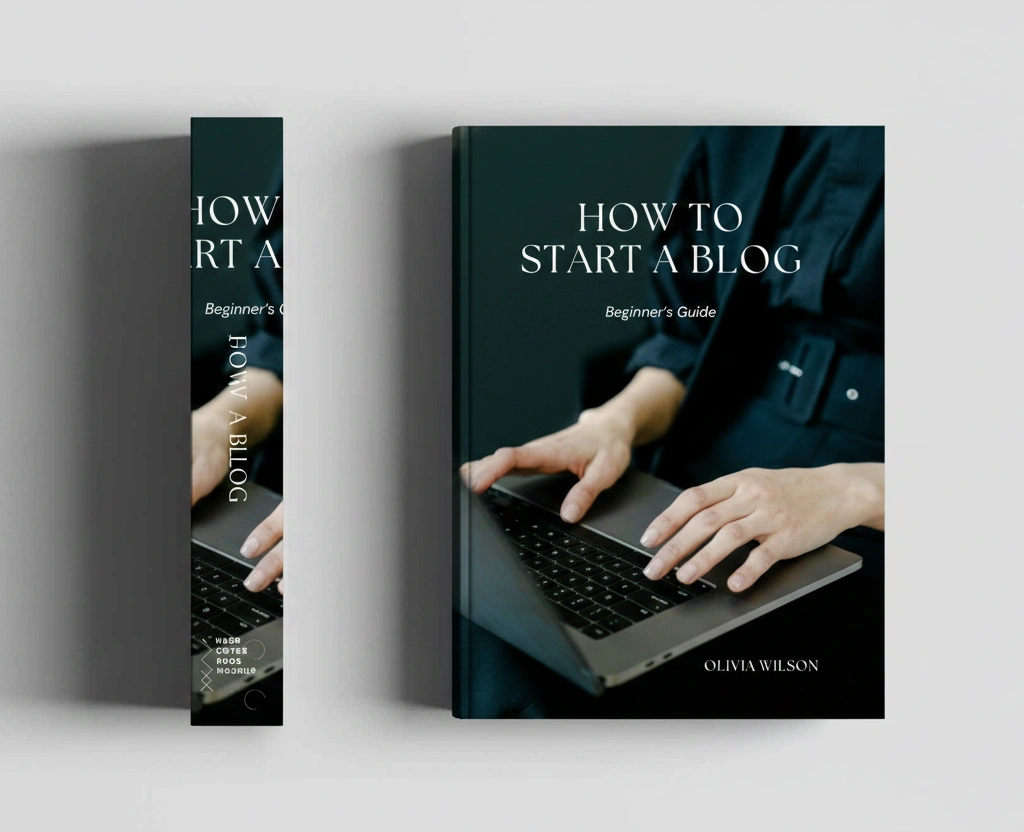
eBook Design Examples
Which One Should You Choose?
- Choose Canva for visual control, branding and a wide library of images, icons and fonts.
- Choose Designrr for importing content, building structure and exporting to several eBook formats.
- From my test: Canva’s AI made a good 6-page eBook from pasted text in about 40 seconds, but it couldn’t import a blog post from its URL.
- Use both if you want Designrr’s structure and Canva’s design tools.
Features and plans change, so check the current pricing of each tool before you commit.
Choose by What You’re Making
| You’re making | Better choice | Why |
|---|---|---|
| A visual guide, workbook or lookbook | Canva | You can control every page’s design |
| A lead magnet from your blog posts | Designrr | Importing a URL saves retyping. In my test, Canva’s URL import gave only a screenshot of the post |
| An eBook from a podcast or video | Designrr | It can import from those sources |
| A short PDF on a tight budget | Canva | The free plan may be enough |
| A book for Kindle | Designrr or a Kindle tool | You’ll want an ePub or a file made for Kindle, and Canva can’t export one |
| Book covers and social images | Canva | It has the widest design tools |
If You Plan to Publish on Kindle
A PDF keeps its layout, but it doesn’t reflow to fit small screens, so a designed PDF can be hard to read on a phone or e-reader.
Amazon KDP lists DOC, DOCX, KPF and ePub among its accepted formats. It accepts PDF only for some languages. If most of your book is text, start with a reflowable format, such as a Word file or ePub. Use a PDF for books that you’ll sell or share directly, or for ones that rely on page design.
Canva can’t export ePub, KPF or MOBI files; its help centre says to use a separate conversion tool. Designrr exports Kindle and ePub files from its Pro plan.
Check Your AI Draft Before You Publish
Both tools can write a draft quickly, but a draft isn’t a finished book. Before you publish:
- Check every fact, number and claim yourself, because AI can state errors confidently. In my Canva test, the AI kept my numbers right but added a typo and mixed up the page numbers.
- Add your own examples and experience, since readers can get generic advice anywhere.
- Look at every image, and check that you have the rights to use it.
- Read the book on a phone to see how it looks there.
- Check the rules of the store you’re publishing on. Amazon KDP, for example, asks authors to disclose AI-generated content.
More in AI Graphic Design Prompts
This guide is part of our AI Graphic Design Prompts hub, where you’ll find every related guide, along with tips and common questions.